How Much Does the Tooth Fairy Leave in 2026?
Cash, a gift, or something to save toward
The U.S. average, and how I would choose a little gift for my own child.
See the 2026 amounts
A card can promise a particular gift, or a little credit toward a future choice. AI-generated illustration.
The average Tooth Fairy cash gift in the U.S. is $5.84 per tooth in 2026, according to Delta Dental's Original Tooth Fairy Poll. For a first tooth, the reported average is $7.17. Those numbers can help if you are wondering what to leave tonight, but they do not set the amount for your family.
My first thought would be what my child wants at the moment. I have given my child building sets before, although those gifts were not specifically for losing a tooth. If I were making a little occasion of a lost tooth, I would consider a gift voucher: something my child could bring to me and exchange for a set they wanted.
I am a parent whose child has lost baby teeth, and I also sell baby tooth keepsake boxes and Tooth Fairy accessories through Pambo. The voucher idea below is something I would consider for my family, rather than a tradition we have already established.
What is the average Tooth Fairy amount in 2026?
Here are the U.S. figures from Delta Dental's 2026 Original Tooth Fairy Poll. All amounts are in U.S. dollars.
| Gift | Reported average |
|---|---|
| A lost tooth | $5.84 |
| A first lost tooth | $7.17 |
The regional averages were $6.45 in the Northeast, $5.99 in the West, $5.89 in the South and $5.27 in the Midwest. These are broad regional figures, not a price list for your neighborhood.
The survey ran from January 5–15, 2026, with 1,000 parents of children aged 6–12. The publisher reports a margin of error of ±3%. The national average rose from $5.01 in 2025; the first-tooth average rose from $6.24.
If you want to leave cash, choose an amount you are comfortable giving. A $1 or $2 gift can be your family's choice even when the survey average is higher. There is no need to match the average down to the last cent.
Does the Tooth Fairy have to leave money?
A gift or a note can mark the occasion too. In our family, presents usually come at particular moments, such as birthdays, or sometimes as a reward. We also have a points system for everyday routines, including getting up on time, brushing teeth and tidying up. My child can save those points toward something they want.
That is why I would think about a voucher. It connects to a way of choosing things that is already familiar at home.
A building set might cost more than the cash I would otherwise leave. I would choose it because I knew my child wanted it. This is not necessarily a cheaper option, and I would not suggest buying a bigger gift just because a tooth has fallen out.
How I would use a Tooth Fairy gift voucher
I can imagine two versions, depending on what I had ready.
If I already had a building set
I would make the voucher for that particular set. My child could bring it to me and exchange it, so the little card becomes part of giving the present.
A little gift for your lost tooth
This voucher is for [name of building set].
Bring it to me and we can get it out together.
Date: [date]
Naming the set makes the promise clear. I would not need to put its price on the card.
If I did not have a gift ready
I would set aside an amount toward a future gift, or add some points to our existing system. My child could keep saving and choose something later.
A little more toward something you want
[Number] points to add to your total.
Save them toward a gift you choose.
Date: [date]
If your family uses money rather than points, the middle line could be: “[$ amount] toward a gift you choose.” Use the version your child understands, and record the credit wherever you normally keep track of it.
These are wording ideas you can copy onto a piece of paper. An ordinary envelope is enough to hold the card. If your child enjoys leaving the tooth by the bedroom door, a hanger with a pouch can give the exchange a regular place; check the fit of your folded note in the pouch first.
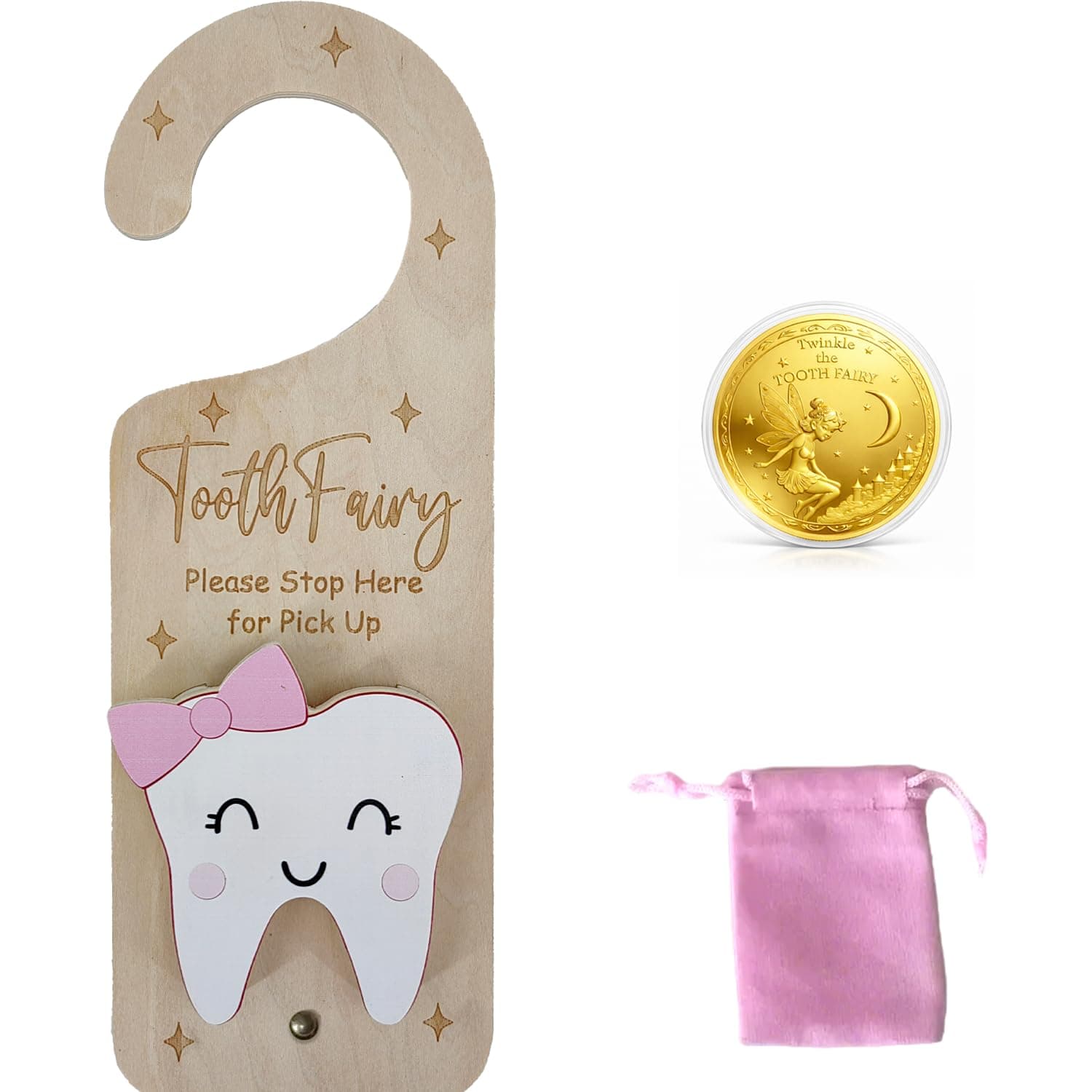
PAMBO Tooth Fairy Door Hanger
A pouch for the tooth at the bedroom door. Check the fit of a folded voucher before using it for the exchange.
For help arranging the evening, see what to prepare for a first Tooth Fairy visit.
Does every lost tooth need the same reward?
I have not planned a reward for every tooth. I would not necessarily give a voucher each time. Perhaps another lost tooth would mean a few extra points; I have not decided yet.
That is why I would write the voucher for this particular occasion, without promising another building set next time. If you prefer a fixed amount for each tooth, that is another straightforward way to do it. Choose an arrangement you are happy to explain and follow through on.
The first tooth can have a little extra attention without a more expensive present. A dated note gives you something to keep. If you do choose a bigger first gift, you can explain that it is for the first tooth rather than the start of a price list.
“Why did my friend get money?”
For my child, I would connect the answer to the thing they had wanted:
“Your friend can use that money to choose something they like. You told me you liked this building set, so this time I prepared a voucher for it.”
If I had added points instead, I might say:
“You have some extra points this time. You can keep saving them until you have enough for something you want.”
I would not need to guess why the other family chose cash or compare the price of the two gifts. I would explain what this particular gift meant for my child.
Use the story your child enjoys
We have not made a strong habit of saying that our gifts came from the Tooth Fairy. If my child knew the character from a story or a cartoon and enjoyed the idea, I would be happy to say the voucher was something the Tooth Fairy left. Otherwise, I could simply call it a little gift for a lost tooth.
You can write the note in your own voice. For a fairy version, change “Bring it to me” to “Take this to your parent to exchange for your gift.” The parent still needs to know exactly what the voucher promises.
If your child would enjoy a letter or certificate alongside it, browse Pambo's free printables. A few handwritten words are enough too.
Keep a small reminder of the day
Write the date on the voucher before you give it. After it has been exchanged, you might save the card, take a photo or keep the tooth. There is no need to keep everything.
A baby tooth box is one option if you want a place for the teeth themselves. It serves a different purpose from the gift: the gift is something to enjoy now, and the box is somewhere to keep a memory afterward.
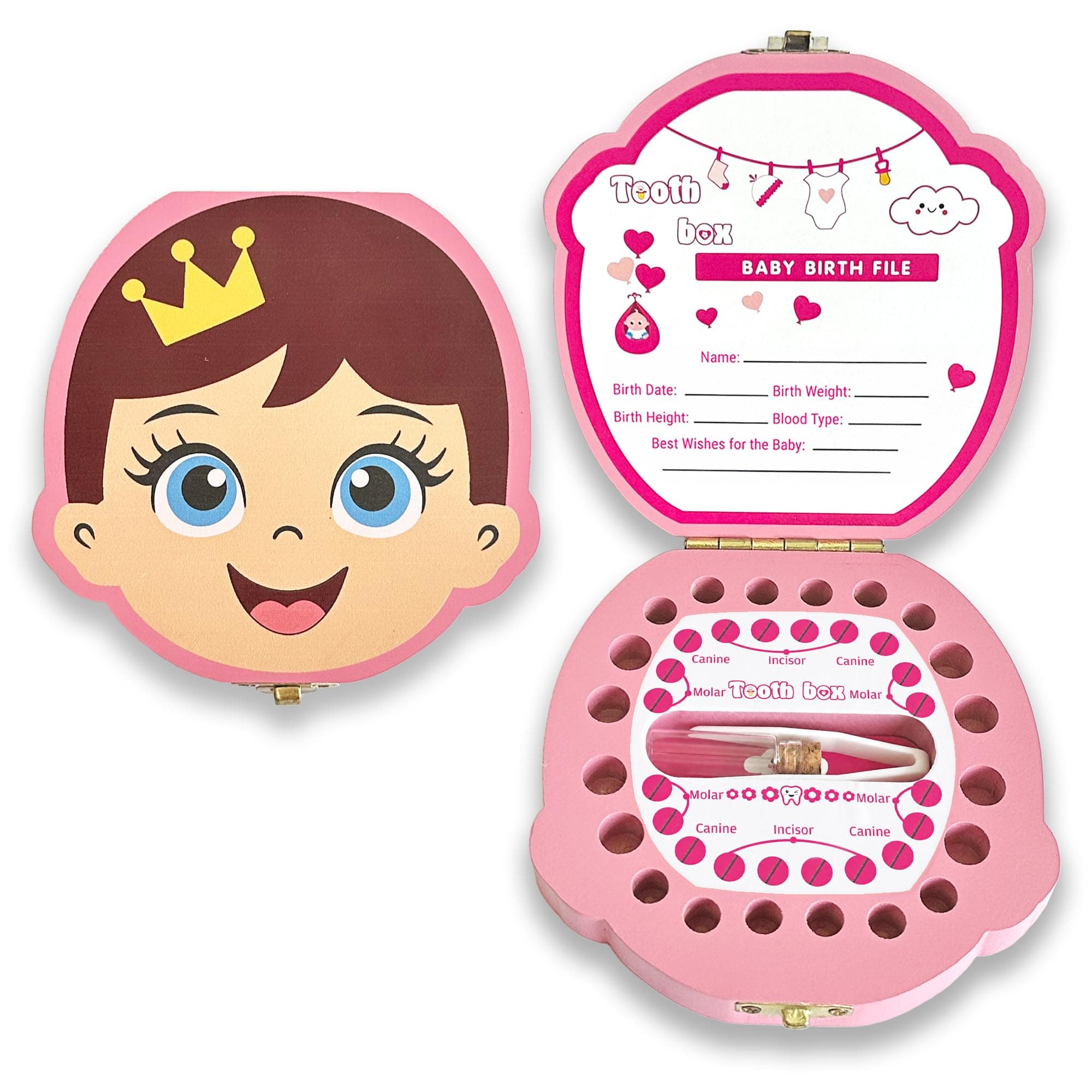
PAMBO Baby Tooth Box
When you are ready to keep the tooth, give it a home in a PAMBO baby tooth keepsake box.
For me, the choice would start with what my child had been looking forward to. If I had the building set ready, the voucher could lead to that. If I did not, a little credit toward a future choice would leave us room to decide later.
A few words to go with your gift
Browse letters and certificates if your child enjoys the Tooth Fairy story. The voucher examples above can be handwritten; they are not downloadable templates.
Explore free printablesThe opening scene is an AI-generated illustration of the voucher idea, not a photograph of our family. Product cards use catalog images. As an Amazon Associate, Pambo earns from qualifying purchases.
← More from the Pambo Journal